data.world
When I joined data.world, design was treated as delivery. Designers shipped features; strategy happened elsewhere. I came in to change that, and over 18 months, I did: rebuilt the design organization, led a complete platform overhaul, and launched new product experiences that opened revenue lines the company hadn't accessed before.
I reported directly to the C-suite and owned everything: design strategy, the design system, information architecture, research, and the team itself. The work wasn't just about making things look better. It was about making the platform work for a broader set of users, including non-technical ones, and building the organizational muscle to keep improving at scale.
The platform had grown organically for years: inconsistent patterns, unclear navigation, and an experience that assumed deep technical knowledge from every user. I led a full redesign of the look, feel, and information architecture, and built the design system from the ground up to support it. Delivery time dropped 30% after the system launched.
↓ 30% delivery time · Consistent cross-product experienceDesigned and launched an AI-powered marketplace that made data discovery accessible to non-technical users for the first time. This wasn't a cosmetic feature, it was a new revenue line. The design work had to balance discoverability, trust, and the complexity of enterprise data governance simultaneously.
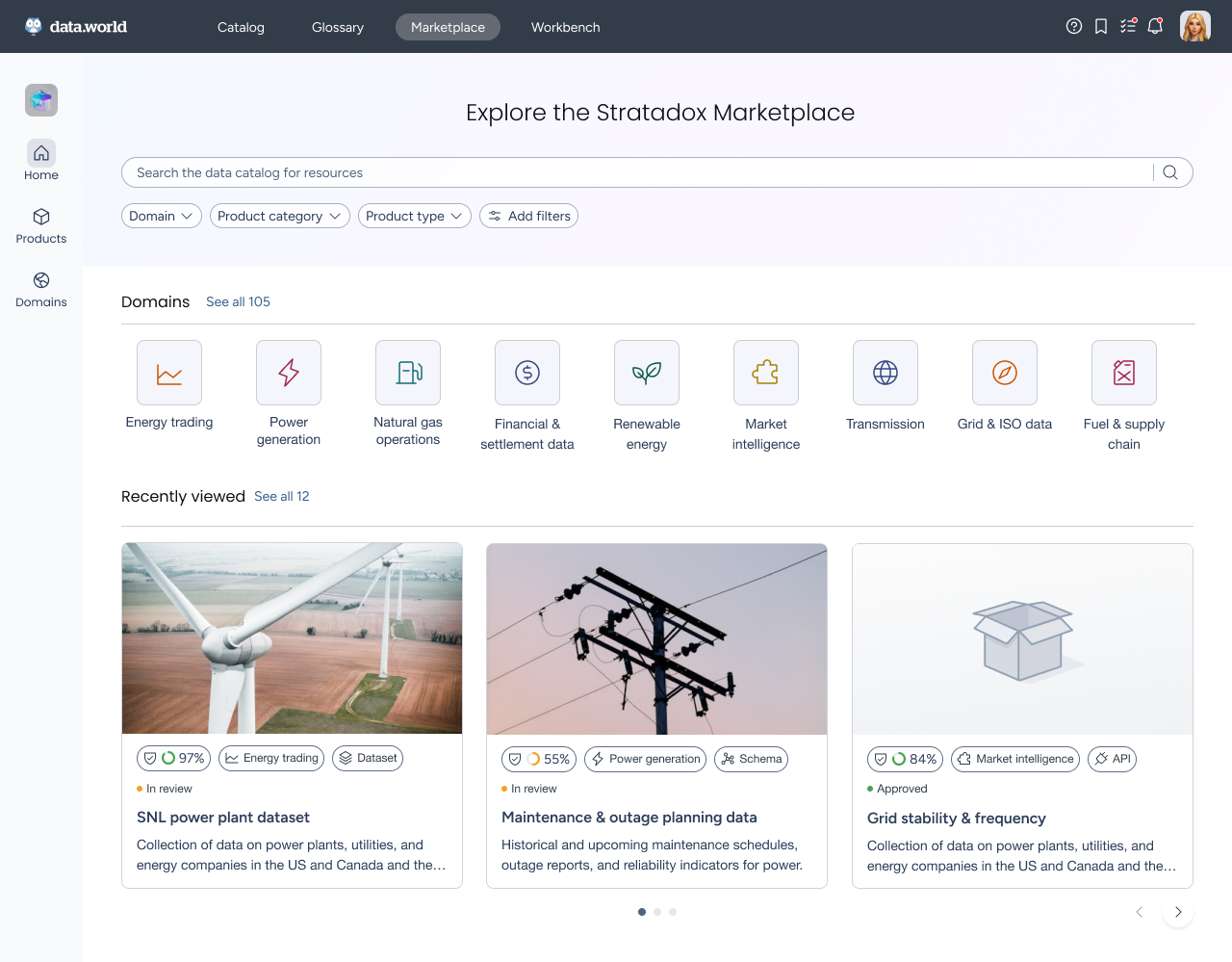 New revenue channel · Non-technical user adoption
Built a self-serve onboarding experience that let new users reach value without needing a sales-assisted implementation. The design had to work for both technical and non-technical audiences, and it needed to make a complex data platform feel approachable on day one.
Faster time-to-value · Reduced implementation dependencyBuilt the frameworks the team was missing: leveling guides, mentorship structures, design operations processes, and a direct connection between UX metrics and OKRs. For the first time, design outcomes were legible to the business in business terms.
UX metrics tied to OKRs · Scalable team structureCase Study
A closer look at the platform redesign: the diagnosis, the decisions, and what it took to ship inside a high-growth organization.